A majority of businesses begin with software already available on the market. Customer relationship management tools, project management systems and payroll platforms, accounting software, and support ticket systems allow organizations to start quickly and without major development expenses.
This approach is a good option for a wide range of businesses. It is well-established. SaaS is affordable, easy-to-deploy and built to handle common business challenges. However, growth often changes the game. As businesses become more advanced, they are able to create workflows process, procedures, and even customer experiences that are unique to their industry. Once a system was working perfectly, it can be causing inefficiencies, forcing employees to use workarounds, duplicate data across systems, or manually perform tasks that should be automated. It is at this point that leaders often begin to investigate whether a tailored solution might yield more benefit over the long run.
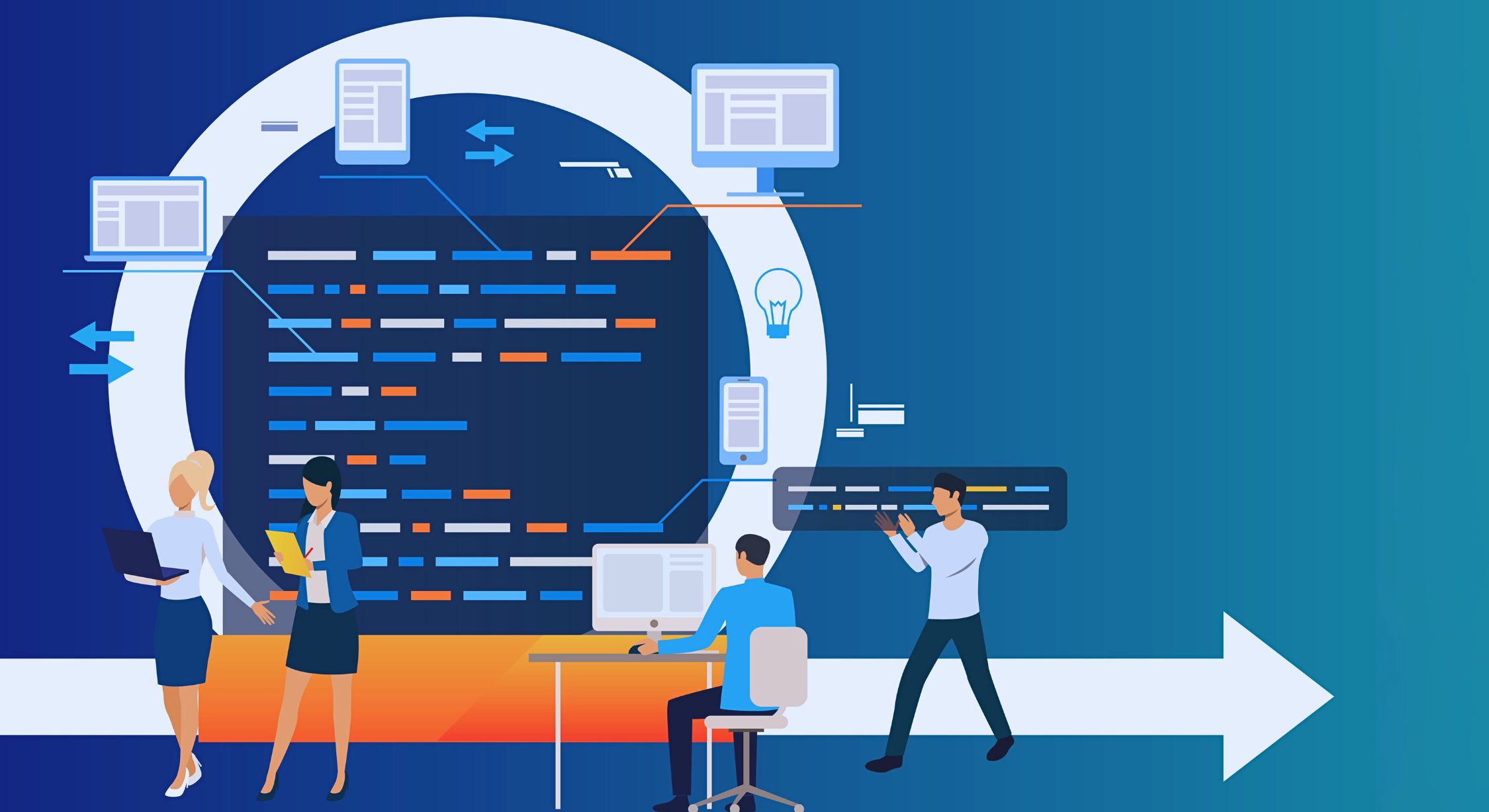
There are many issues that cannot be Solved using Custom Software
One of the biggest misconceptions in the field of technology is that each task requires a custom-designed platform. In reality, many tasks for businesses can be handled using software that is already in use. Payroll, email marketing, accounting, customer support ticketing, and other HR functions are often better handled by proven SaaS solutions. These platforms were created over a long period of time and are regularly updated. They also benefit from an experienced support personnel.
When a business’s processes directly impact the competitive advantages of its company, then custom software development is an important service. If a company’s workflow is what sets it apart from competitors, the use of generic software can hinder development and innovation.
Competitive Advantages Deserve Custom Solutions
Businesses seldom gain a advantage over their competitors by utilizing exactly the same equipment as their rivals. Some successful businesses grow because they have developed unique processes, customer-centric experiences operating systems, or service delivery models. The problem is that these distinctive features are often difficult to support by using off-the-shelf software.
A purpose-built solution allows organizations to build technology around their specific workflow, rather than forcing their workflow to fit someone different software. This is the reason a knowledgeable custom software development company can provide significant value through the creation of systems designed around the organization’s goals, operations, and future expansion plans. Instead of adapting processes to software limitations or vice versa. Businesses should develop technology that is in line with their strategy.
The integration challenges continue to expand
Modern businesses are using greater amounts of software than they ever did before. CRM systems are utilized by sales teams. Accounting platforms are utilized by finance teams. Marketing departments make use of automation tools. Support teams for customers use separate systems to manage tickets. Many times, departments with distinct departments have distinct workflows. The difficulty of managing data across multiple platforms increases as the number platforms grows.
Information is often scattered which requires manual updates, posing the risk of mistakes. Teams can spend time moving data between systems rather than working on more valuable tasks. Custom integration layers resolve these issues by linking multiple platforms to one operating ecosystem. Businesses can streamline workflows and increase the accuracy of data and efficiency by developing workflows that are streamlined instead of forcing employees to navigate their way through various applications that are not connected.
Enterprise Software Is About More Than Scale
People tend to think of enterprise software as large companies. However, enterprise-level software tends to focus less on size of business and more on operational complexity. Organizations experiencing rapid growth often face issues related to security, reporting, compliance, workflow automation, as well as cross-department collaboration. Software products that are standard may not be able to handle these requirements efficiently.
Well-designed enterprise software development projects create centralized systems that support the business processes while increasing visibility and decision-making. It’s not enough to create software. The goal is to build an technology base that will allow organizations to run more efficiently and effectively as they grow.
Why Ownership is important
One often-overlooked advantage of custom development is ownership. When companies rely on third-party platforms, they are dependent on subscription pricing models, product roadmaps, feature availability and vendor decisions. Changes made by software providers can affect directly the operations. Custom solutions provide greater control.
Companies own the software they use, the infrastructure, and the direction for the platform in the coming years. They decide on the features that are created, how data is stored, and how technology evolves in the course of time. For many companies, this flexibility becomes increasingly valuable as operations become more specialized.
Predictability is crucial to Project Success
Many software projects are given poor reputations due to the fact that they fail to maintain specific expectations throughout the process of development. Uncertain requirements, changing goals, poor communication, and inadequate managing of projects are usually the reason for delays and overruns in budget. Successful projects require structure.
Digital Heroes Co tackles this challenge by clearly defining scope of projects, using fixed-scope sprints, offering weekly demos and providing direct communication with senior management. These practices improve transparency while reducing the likelihood of projects exceeding the initial goals. The regular demonstrations allow the stakeholders to observe progress in real-time and provide feedback before issues develop into larger issues.
Create Technology that can support Long-Term Development
Today’s businesses operate in an increasingly digital environment where technology influences the performance of every aspect. Customer expectations continue evolving. The efficiency of operations is now essential for success. Nowadays, data-driven decision-making is a necessity and not a luxury.
Engaging a reliable SaaS development firm or experienced custom software development company can help organizations develop solutions that address these issues directly. When it comes to creating internal tools such as customer portals, integration platforms and MVPs, or even large-scale production systems, custom software development services provide businesses with the flexibility to tackle issues that standard software simply cannot address.
Technology must be able to change with your Business
Software solutions that are most efficient don’t have to be the most complex. The most effective software solutions are those that correspond to the way in which a business operates. As businesses expand and expand, the gap between the capabilities of software and the requirements grows. The point at which custom development becomes less about technology and more about strategy.
Enterprise software development enables organizations to create systems that support their unique workflows, strengthen competitive advantages, and improve operational efficiency. With the assistance of a seasoned SaaS firm, companies are able to build solutions that will grow along with their goals. Technology shouldn’t be a force for companies to change their practices in today’s competitive market. Technology that is right allows businesses to evolve to the demands of the needs of business. This allows teams to improve their efficiency and better serve customers and create a strong foundation for future growth.