When the work environment is smooth, most people do not think about employment laws. They get to work, receive a check as well as take their vacation time and deal with some unpleasant meetings, and continue with their lives.
Whenever the normal rhythm of work is interrupted, it tends to bring up legal issues. The promise of a promotion is not fulfilled. The manager’s behavior is becoming increasingly uncomfortable. The behavior of a manager becomes more uncomfortable. A formal complaint to HR could make things worse rather than improving. Or a long career suddenly ends with a termination letter. Many employees are shocked by how easily one issue within the workplace could lead to another.
When there is a Workplace Conflict doesn’t have a Simple Name
Imagine an employee that has been with the same company for 7 years. An employee who has raised concerns about inappropriate comments from the manager is able to notice a difference after raising the issue. Meetings take place without them. Important assignments are lost.
Is it a matter of the discrimination of harassment, retaliation or reprisal? There could be multiple factors to consider. Individuals who have been subjected to harassment at work in Toronto shouldn’t assume that the circumstances leading to a complaint were unrelated. It is important to review the timeframe and the specific facts before making a decision about the legal options available.
The job may end without a formal termination.
Even if the employer does not say “You are fired”, a substantial reduction in wages, a major change in the description of work, or an important shift in the duties of employees could leave employees wondering if they have been replaced by some other person.
This can raise questions about constructive dismissal Ontario law. It is a matter of fact. The law does not apply to every stressful assignment, managerial decision, or workplace change is eligible for. It is imperative that those who are contemplating leaving due to major shifts do not think they are aware of what the law states.
If you are fired When you lose your job, a myriad of questions are raised.
The subject of money is often the first thing that comes to mind when employment is ending. “How much will I be paid for my severance?” sounds like a easy question, however there’s no one-size-fits-all solution. Employment agreements, relevant legislation and the length of time that employees have served, compensation and other circumstances may affect an employee’s entitlements.
If you’re looking for a lawyer that is experienced in severance package law close to me, it could be beneficial to review the entire package rather than just the number of weeks.
Likewise, wrongful dismissal Ontario doesn’t simply mean an employee believes the termination was unfair. A legal review can involve whether a proper notice or compensation was provided and what effect the employment contract can have on the obligations.
Certain employees are subject to an entirely different legal framework
The kind of employer is a further aspect which is easy to overlook. Ontario’s employment law is the primary source of regulation for many employees. Certain sectors, on one hand, are regulated at federal level. Certain industries are subject to federal law.
Employees who are unionized may encounter issues related to human rights, duties of fairness, and the right to represent. Understanding the legal framework that applies to a dispute over employment is important.
Employment Law Covers the Whole Relationship
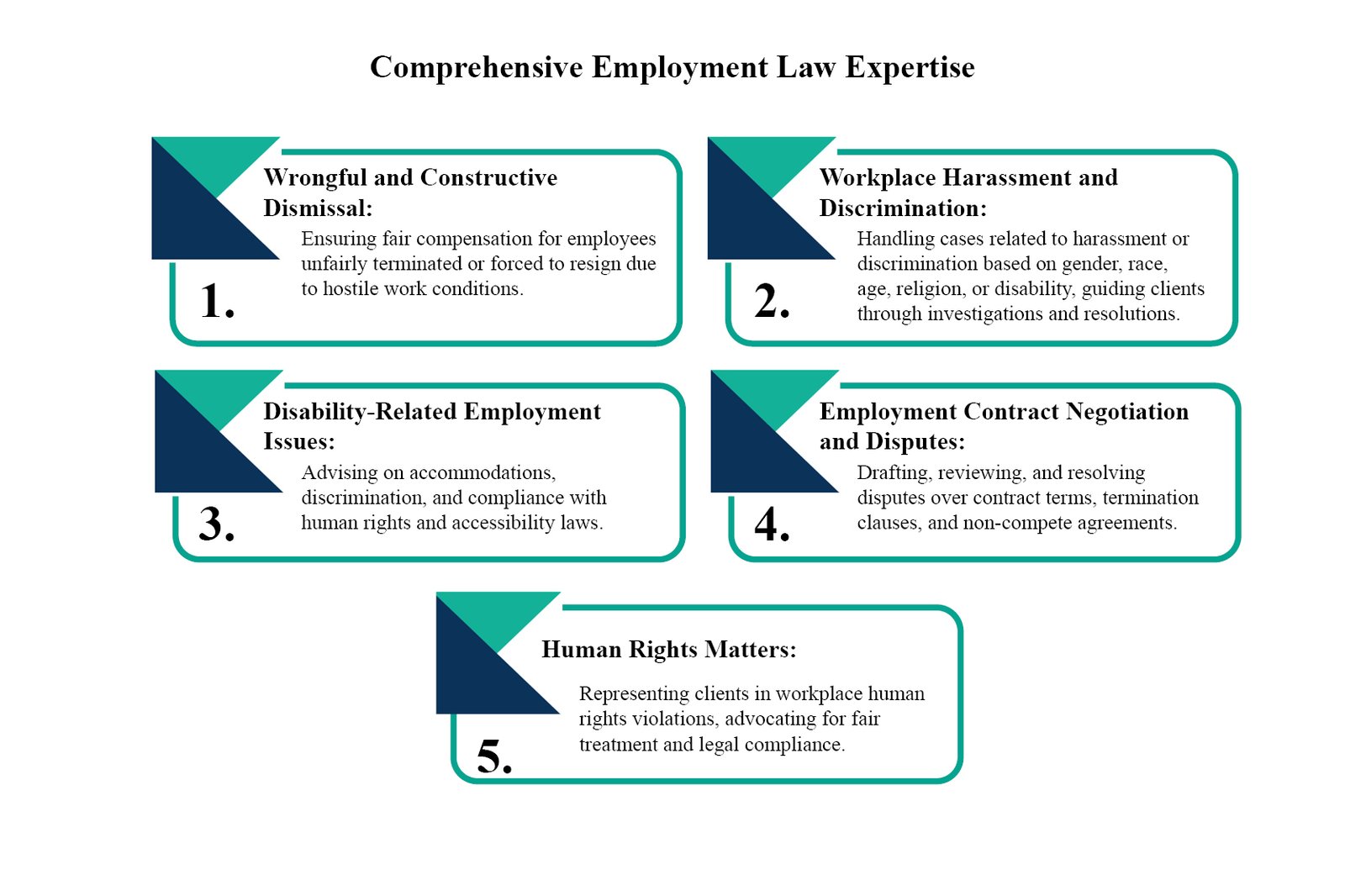
HTW Law has been serving the Greater Toronto Area for over 20 years and has handled matters relating to employment in Ontario. Its practice includes wrongful and constructive dismissal as well as severance and harassment in the workplace, sexual harassment, discrimination, reprisal, disability discrimination, HRTO and OLRB matters and related human rights issues. The firm can assist in cases that involve federally-regulated employees in Canada.
Conflicts at work aren’t often neat enough to fall under one heading. An argument over work conditions can lead to a harassment claim, a significant change in the employment status or even a termination.
Understanding the events that led to the employee’s last day can be as important as understanding what actually transpired.