Surface finishing has transformed into a precision driven engineering procedure. In today’s manufacturing landscape the quality of coatings has a direct impact on the durability, corrosion resistance and overall product perception. To meet the expectations of customers who expect flawless finishes and improving global standards, numerous manufacturing facilities are turning to paint robots.
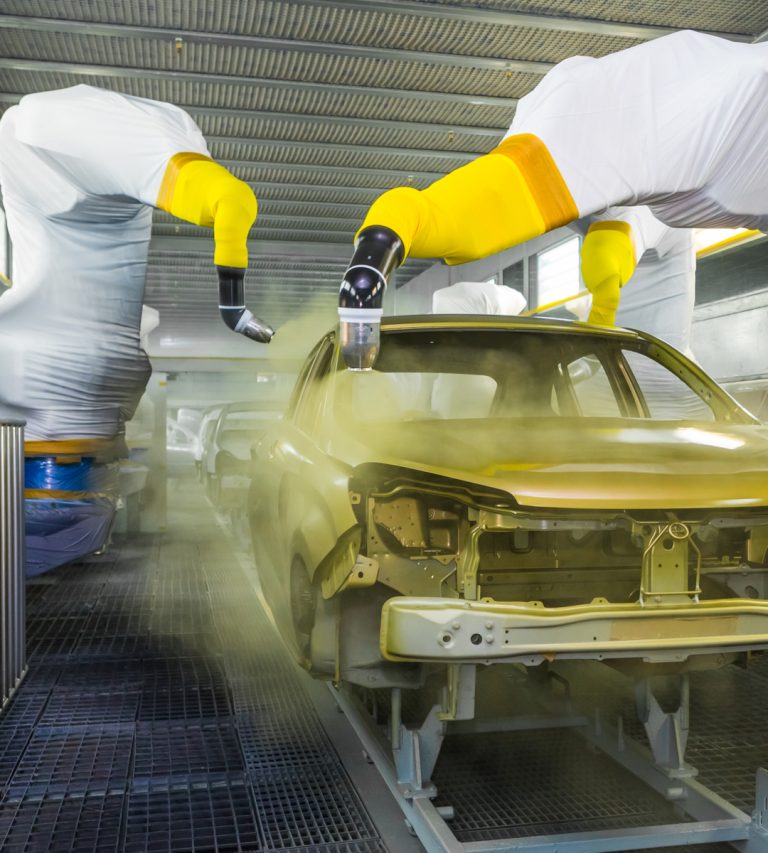
Image credit: automatedsolutions.com.au
A modern paint robot brings structured motion and programmable accuracy to applications that once depended on operator technique. Automating the paths and angles of spray and speed, eliminates a lot of issues that lead to inconsistent film builds or excessive material usage. This results in coating processes that are stable and promotes First Time Quality.
Consistency, efficiency and tangible improvements
Manual painting usually introduces variations in thickness and coverage due to human fatigue, or tiny differences in technique. Paint robots remove that variability by repeating identical motion patterns throughout each production cycle. This provides a consistent finish for all parts and optimised distribution of materials.
A robotic paint system can enhance transfer efficiency. Overspray is minimized by maintaining a certain distance between the applicator and the component. This allows more coating to reach the target surface. Reduced material waste leads to cost savings. Reduced volatile organic compound emissions also contribute to the environment.
The integration of fluid handling into paint robotics ensures precision in mixing ratios for multi-component coats. This prevents inconsistent coatings that affect the integrity of finish. Stable flow control combined with adjustable parameter settings allows manufacturers to modify the atomisation or spray pattern without affecting production.
Productivity and safer workplaces
Utilizing a robot painting system has an enormous benefit in terms of increased uptime. Paint robots are more efficient than manual operations since they work without interruption. Once they are programmed, they can ensure continuous throughput with no interruptions or continuous supervision.
It is vital to think about security in any place that employs solvent-based or bi-component coatings. Paint atomised can cause hazardous environments, especially when working with materials which are explosive or reactant. Modern paint robots can work safely in challenging environments. This reduces the risk of exposure to harmful chemicals and increases workplace safety.
Conveyor track technology enhances productivity by allowing robot paint application as components remain in motion. This feature increases the working space, and also ensures that production lines are running efficiently.
Australian Automation Expertise Supporting Industry
It is vital that manufacturers have access to automation partners that have experience. In Australia, Automated Solutions has built a strong reputation for delivering advanced robotic integration services. As FANUC certified robotic integrators who have extensive experience in automation engineering, the team can help businesses develop custom robotic paint solutions aligned with their operational goals.
By combining technical expertise with practical industry experience, Automated Solutions assists manufacturers in evaluating their current methods and conceiving the most efficient robotic paint cells. Through collaboration in designing, simulation and system integration, facilities gain an understanding of anticipated performance improvements before installation begins.
Paint robotics encompasses more than just an automation. It is about improving quality, safety, and efficiency. Paint robots designed properly can transform surface finishing into an efficient, repeatable and controlled process. The support of automation specialists can help manufacturers to improve their competitiveness, and ensure longevity in a highly competitive market.